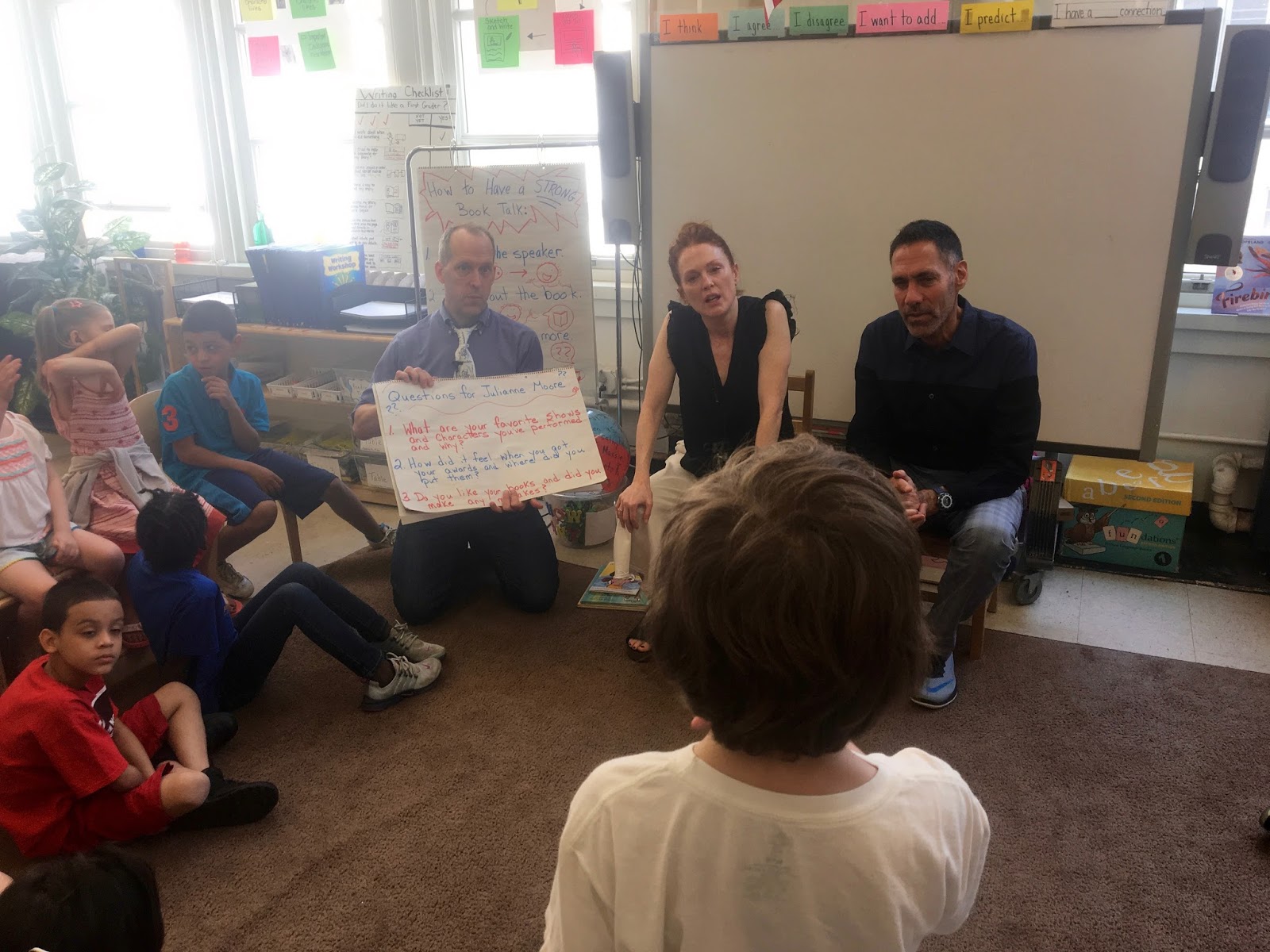
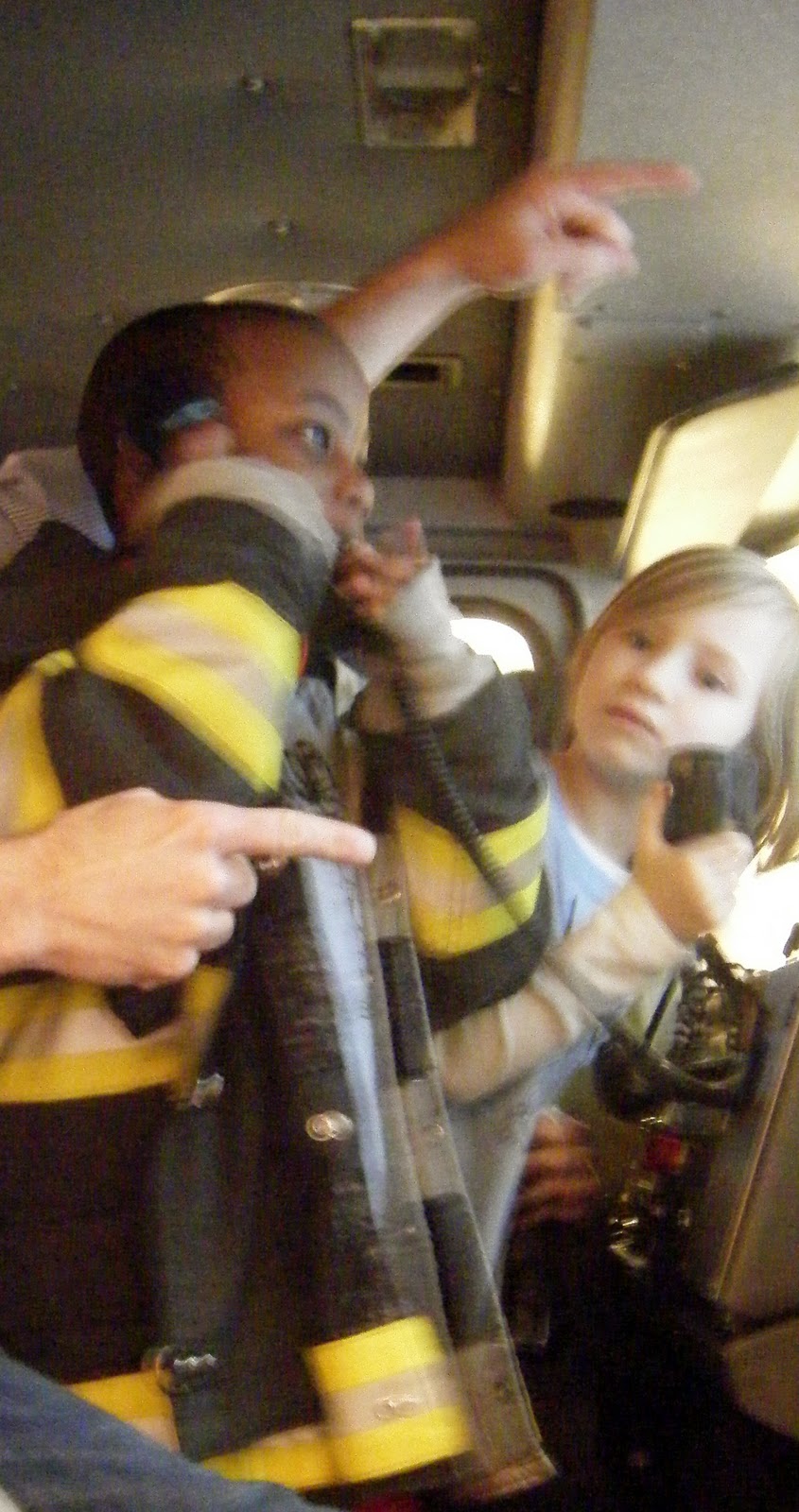
Showing posts with label writing process. Show all posts

Monday, August 28, 2023

The Science of Reading


The Science of Reading is an educational finding, based on research, which attempts to unravel how humans become literate. Many school districts in the nation are currently embracing the findings and implementing them into elementary school classrooms. The basic premise is that educational institutions have gotten reading instruction all wrong and an update in the operating system is necessary and overdue. 

All of this is beautifully presented in a podcast entitled Sold a Story by Emily Hanford. I listened to all 6 episodes yesterday on my drive from Rochester, NY to Trenton, NJ. It is an engaging investigation into reading theory, history, and implementation. It should be required listening for educators, especially those who have not gotten this information in their training programs.

As a reading specialist, I already knew most of the information. Yet, there were some surprises (I'll get to that in a minute). I've lived through a range of the educational approaches about reading presented in this podcast. I remember phonics-based instruction as a child with worksheets asking me to circle the long vowel in a series of words. I also remember my confusion because I was never told what that meant. What made a vowel long or short? A bit of explicit instruction would have been helpful and my early experience influences my teaching today because I know what it is to be the child who benefits from explicit instruction. 

Over the years, the pendulum has swung between phonics-based instruction to wholistic methods and back again. Things shift as we learn more and, it seems to me, they shift because people simply want something different. We also cannot ignore the influence of financial greed and political gain in how schools are run. All of this is covered in Sold a Story.

The bottom line is many schools are now throwing out the work of Marie Clay, Lucy Calkins and Fountas & Pinnell to focus on phonics. In my training and work with hearing students, I've always incorporated phonics instruction and was surprised to learn -  in the podcast - that Marie Clay's Reading Recovery and Fountas & Pinnell's Leveled Literacy Intervention considered it optional.  That was never how I implemented their work. For this, I give thanks to my mentor, Dr. Joanna Uhry, who taught me the value of matching my instruction to meet the needs of the children rather than providing a one-size-fits-all approach. 

This "new" direction, propelled by the science of reading, comes with questions. Questions regarding assessment and instruction that administrators and coaches, who know much less than I do, are undoubtedly going to struggle to answer. I just hope we do better for our struggling readers and can one day celebrate an America with higher literacy rates because to paraphrase Whoopi in Ghost, we in danger girl.

Sunday, October 6, 2019

Insights

Every page is an opportunity to get to know our students

Little hands slide across white paper, black lines creating images that provide insight into the child's thoughts. What is going on in their lives that is yearning to be expressed in these drawings? How is this sustained concentration serving the child's need to communicate?

My kindergarten students are active, emotional, and exceedingly dramatic with short attention spans that are easily influenced by pangs of hunger, bouts of sleepiness, and intermittent moodiness. These adorable tykes are just five-years-old after all (some are still only four). But, there are two things that capture their attention - listening to stories read aloud in spoken English and American Sign Language, and independent writing.

This class loves to write!

I walk around the classroom with my team teacher, Sarah, and am fascinated by their drawings. I'm interested, of course, from a literacy perspective and in facilitating their development along the writing continuum. Yet, I'm equally fascinated by the inner workings of their stories. Every page is an opportunity to learn more about each one of them. What is happening in their lives? How are they processing the many things that are out of their control? Can they tell me about the pictures? Do they have the language skills to do this or must I carefully navigate and scaffold my questions to bridge that divide?

Here are a few examples...

"That's me moving into my new house."

This is a joyful example of what is either real or imagined for a young boy who has had to deal with some unfortunate challenges. His vibrant smile and animated tone as he explained how his whole family was moving into a new house brought hope. I saw in this unfinished drawing that his mind is grappling with things far more immediate than letters and numbers. Teachers are called on to do more than simply impart information. We are caretakers, advocates, and champions. We are here for him.

"Mommy has a baby inside"

This girl's drawings depict the very imminent arrival of a new sibling. The smiles and hearts let me know it is a happy occasion for her family. The "baby inside" (not sure why there are two in this drawing) is an adorable representation. I remember creating similar drawings when I was 7-years-old and my mom was pregnant with my sister, Jennifer.

A flower monster

I sat next to this child and asked about his drawing. He told me, "It's a flower monster." How deliciously complicated, I thought. Juxtaposing the gentleness of flowers with the scariness of a monster seemed brilliant. He is certainly not the first person to invent such a thing, but the vibrancy in the expression cannot be denied. And he made it into a book! That'd be a cool children's book - the fragrant, misunderstood monster dropping petals and drooping every so often.

There are many, many more to share and more are created every day. And I am honored to have the opportunity to sit next to these children and say, "Tell me about your drawing".

Sunday, April 29, 2018

A Broadway Books First Class Visit From Aaron Mark

Playwright/Director Aaron Mark surrounded by his Pre-K and Second Grade fans

"SQUEAMISH, SQUEAMISH, SQUEAMISH..."

Setting the stage: Imagine 30 children chanting SQUEAMISH as Alison Fraser settled into her chair for her Broadway Books First Class guest artist visit last month.  The Pre-K and Second Grade students were eager to hear all about her latest theatrical triumph - Alison is currently nominated for several awards recognizing her work, including the Outer Critics Circle Award - in Aaron Mark's one-person horror play SQUEAMISH. During her visit Alison walked them through the overarching themes of the show in child-friendly terms, topping it off with "You actually can have too much of a good thing".

The little ones were fascinated and throughout the conversation brought Alison back to the dark, frightening, exhilarating, heart-pounding mystery evoked by the bloody handprint shown on the poster. She masterfully led the discussion, spending over 10 minutes on the ideas presented in SQUEAMISH.

Children have a desire to be safely scared. They want to push the boundaries, face their fears and know it'll all turn out okay in the end.  We all do. Well, except me.  I lose my shit in a haunted house but even I realize the benefits of fear.

After Alison's visit they still wanted to talk about the show.  They drew SQUEAMISH-inspired pictures and came up with some of their own eye-popping stories. So, I was over the moon when Alison introduced me to Aaron Mark on Opening Night of CHILDREN OF A LESSER GOD.  At the after party I talked with Aaron about the children's reaction to his play and he was intrigued. I extended an invitation to him to come and talk to them about his work. He accepted on the spot!

Snip! Snap! Snip!
Aaron Mark reading THE STORY OF LITTLE SUCK-A-THUMB with ASL interpreter Stephanie Feyne

We decided it would be too challenging to find an appropriate snippet from one of his plays to read aloud so we found the next best thing. He would read three German cautionary tales - THE STORY OF LITTLE SUCK-A-THUMB, THE DREADFUL STORY ABOUT HARRIET AND THE MATCHES and THE STORY OF AUGUSTUS WHO WOULD NOT HAVE ANY SOUP - from STRUWWELPETER (Shockheaded Peter). The second graders were already familiar with suck-a-thumb and the great tall tailor so I knew they could handle them (it turns out they thought the stories were either funny or terribly sad).  After Aaron's reading of poor Harriet (who is reduced to ashes after playing with matches) we had to take a break for a fire drill.  Coincidence?

I couldn't wait to go back to school to tell the young horror show fans that AARON MARK himself was coming to visit them. And their reactions when I did? A gasp, wide eyes, open-mouthed smiles and words of happy disbelief.  A week-long study of Aaron and his work followed as we prepared for his visit.

The children decided on three questions...
1.  How do you come up with your plays without scaring yourself?
2.  How many shows have you written and what was your favorite?
3.  When did you start directing and why?

Photo Credit: Eileen Lograno
Leo asks Aaron a follow-up question, "How do you know it's going to scare people"
Aaron answers, "I've been wrong sometimes." 

We were ready but I sensed that although the students were excited it was tinged with a bit of trepidation. Some children expressed that they thought he might be "creepy" or scary. The dark side of me wanted to tell him to arrive in costume and run into the room laughing BWAHAHAHAHA! But alas, he did not.

As a matter of fact, after he settled into his chair - as Alison did the month prior - we showed them a picture of Aaron in Second Grade. This was a genius move for who could be frightened by adorable little Aaron? The picture set the friendly tone, "He's just like us".  And off we went!

So, how does he come up with plays without scaring himself?  He doesn't! He writes about things that frighten him. After all, we are generally frightened by things we don't understand so facing them head-on is one way to take away their power over us. And when another student asked, "How do you know it's going to scare people?" Aaron said he sometimes gets it wrong. Things he thinks will make the audience cringe in fear is seen as hilariously funny OR something he thinks is funny and no big deal at all has the audience covering their eyes.

This led into a discussion of the writing process. A writer keeps writing, trying out different things, getting feedback from others, seeing what works and what doesn't work and learning from it all. This understanding is something we are trying to instill in our students. As Aaron said, "Writing is rewriting".

Next, Aaron talked a bit about his play EMPANADA LOCA. It was inspired by THE LEGEND OF SWEENEY TODD so once again he had to tread carefully.  Those who could read between the lines caught on to the ingredients of the empanadas but it went over the heads of most of the children (I think).  We even touched upon Greek Mythology with his play ANOTHER MEDEA. His fourth offering in the "scary one-person play" series is on the way!

Photo Credit: Eileen Lograno
A show of gratitude to Aaron Mark

We wrapped up the Q&A by talking a bit about his directing experience and discovering there were five people in the room who have a twin. We ended the visit, as always, with gifts. The children signed a copy of STRUWWELPETER for him and Aaron was the first recipient of a black Broadway Books First Class t-shirt.

Thank you Aaron for spending the morning with us (and for bringing Abby).  And thank you Alison Fraser for the introduction.

Saturday, March 31, 2018

Welcoming Monica Wellington


I have my own version of superheroes. I enjoy Wonder Woman and Superman but they cannot hold a candle to the talented folks who write and illustrate children's books. So, it was a great thrill and honor to welcome children's book author and illustrator Monica Wellington into my classroom earlier this month.

Monica's books have been treasured additions to my classroom explorations over the years. It started with an inquiry-based, Reggio Emilia inspired study of bakeries when I taught kindergarten. Her book Mr. Cookie Baker was the perfect addition to our classroom library.

The wonderful book CrĂªpes by Suzette was a helpful resource when another kindergarten class was studying France. The book is now out-of-print but it lives on in a fantastic app that I've spent many, many hours enjoying with my great nephew. He's learned beaucoup French words and phrases from the app and is determined to visit Le Jardin du Luxembourg in Paris because of the videos embedded within the app.

I reached out to Monica Wellington many years ago and a visit has been in the works for quite a while. Happily, the stars finally aligned and we scheduled a visit with a few Pre-K classes as well as the First and Second graders. As spring was approaching she chose Zinnia's Flower Garden to read and discuss.

Monica Wellington reads her book Zinnia's Flower Garden alongside ASL interpreter Rick Rubin for the children in Pre-K 

She brought along a large bouquet of flowers for the children to make observational drawings. She walked the children through the process of writing a book, from idea to publication (a two year undertaking!). And she held an informative, fun Q&A.

There is more than one way to capture an image

Children also had an opportunity to take home autographed copies of Zinnia's Flower Garden and Apple Farmer Annie. Monica personalized each one with a sweet message and a drawing. She even contributed a big book version of her first children's book Who is Tapping at my Window? to our classroom library!

You can also read about Monica's visit (in her own words) by visiting her blog - click here.

Thursday, August 10, 2017

A Broadway Books First Class Visit from Julianne Moore

First Graders embracing what makes them unique with Julianne Moore

Julianne Moore is a wildly successful actress, well known and well respected - she won an Academy Award! - for tackling the complicated inner lives of ordinary (and extraordinary) women in a way that allows audiences to understand and empathize with them.

She also writes children's books.

Her work as an author for the elementary school set is distinguished by the same standard of quality she brings to performing.

The Freckleface Strawberry book series showcases her uncanny knack for capturing the everyday experiences and exuberant drama inherent in the life of a seven-year-old.

So, it was an incredible honor to welcome her into my first grade classroom to read those stories and discuss the writing process with my fledgling authors. Julianne joyfully interacted with the children in American Sign Language (ASL) - yes, she signs! - and happily encouraged their participation throughout the visit.

Freckleface Strawberry is a "story about a little girl who is different...just like everybody else".

It was inspired by Julianne's childhood experiences when her red hair and freckles caused some angst and earned her the nickname Freckleface Strawberry. However, as adults, we realize that our troublesome childhood problems don't seem to bother us so much anymore. The eponymous picture book is a story of coming to accept - and eventually celebrate - the things about ourselves that are unique.

Freckleface Strawberry sends the message that rather than losing sleep worrying about conforming or fitting in or wanting desperately to adhere to the perception of "normal" that children instead embrace you-ness. Of course, that is easier said than done and that's why it is up to those of us who know better to provide example upon example of the tenets of acceptance, love, tolerance and forgiveness of others...and ourselves.

A student introduces himself to Julianne Moore in American Sign Language

That message made me wonder about how it plays out in the everyday lives of my students. As Children of Deaf Adults (CODAs) how do they feel about having deaf parents in a hearing-centric society? Do they see the benefits of being bilingual? Is any of this even an issue?

To understand my current students better I enlisted the help of three former kindergarten/first grade students; Kinda, Michael and Lana. My little babies - I taught Michael for four years beginning when he was just 3-years-old in preschool - are now all grown up and attending college. I wrote each of them asking how they felt growing up as a CODA. Their responses were insightful and they all reflected that their reactions were situational (i.e., based on the community around them).
Being a CODA as a child, created very different perspectives for me at the time. When it was school related, I was always embracing the fact that my classmates and I knew American Sign Language because we were able to make the silliest jokes from across the room if we weren't able to speak at the time. However outside of school, I mostly had the attitude every kid had whenever parents wanted us to do something for them.  In my case - and as well as other CODAs I'm sure - whenever my parents needed an interpreter, I was always the one to do it. It was always "Ugh why? I don't want to do it" or "Can't you postpone it?" At the time these appointments they needed me to help translate seemed so long and tiring. I nearly always complained. My feelings being a child of a deaf adult(s) really depended on the situation. 
When I was younger, I never wished my parents weren't deaf, I was amongst other CODAs and so I didn't feel different, we all have had the same experiences with our parents. As I was transitioning from middle school to high school and I was in a whole new different environment and they would have parent teacher conferences or anything that involved the parents I was shy and always excluded my mother...sometimes teachers would ask, how come your parent doesn't come to your (dance) performances?
And like Freckleface Strawberry there is a "happily ever after" when our differences are woven into the fabric of who we are and the person we become...
Growing up, I learnt that being a CODA is something I'd never change. Having deaf parents has been a learning experience.  It gave me a sense of identity in this world. I love the community I am a part of and I love what the culture has brought into my life.
I love being a CODA and I'm so grateful to be blessed with deaf parents.
So we teach. We teach in the classroom. We teach by example in our daily lives. We teach through writing. We teach by being role models. And we teach by sharing our own experiences with a willingness to be vulnerable, honest and open.

Julianne Moore reading Freckleface Strawberry beside ASL interpreter Lynnette Taylor

The Freckleface Strawberry books as crafted by Julianne Moore are chock full of those moments wherein potential roadblocks for children coping with being "different" are met head on. For example, in Backpacks! the character Windy Pants Patrick is seen eating breakfast with his two moms in direct juxtaposition with Freckleface Strawberry and her (more traditional) family. On the next page the children set off to school with a big kiss from their respective parents. The focus is, rightly, on family and love and for many children with two moms or two dads it allows them to see themselves in the pages of the books they read. The effects of that are immeasurable. Brava Julianne!

Each child is different...just like everybody else.

In our first grade literacy curriculum we spend time immersed in series books. We study and write books with the same characters (e.g. Curious George) who engage in different adventures across several titles. The Freckleface Strawberry books, with their relatable characters and storylines, are a perfect fit and every first grade teacher should have them in his or her arsenal of high-quality children's books to pull out again and again, year after year to help meet the objectives surrounding the teaching and learning of series books.

It also helps when you have a guest author like Julianne Moore answering questions about the writing process. The children asked, "Do you like your books and do you ever make mistakes?"
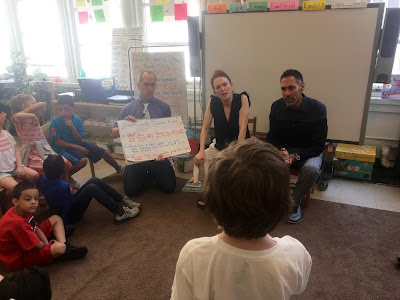
Questions and answers with Julianne Moore

She explained that she likes stories about real people and that inclination has influenced both her choice of roles and her writing. And yes, she told them, "I make a lot of mistakes. Oh, yes! Especially when I am first writing...I read it and think, 'That's bad. I don't like it. I need to do it again.' And so I write it again and again and again until I am happy with it. You have to practice."

BINGO!

In an instant the faces of the little ones showed amazement and relief. It's difficult sometimes for first graders to untangle the mess that is the creative process involved with writing stories. They shared that they sometimes have trouble thinking of ideas and - God love her - Julianne expressed the importance of concentrating and focusing on your work. "But, it still should be fun because the stories can be about anything. They can be about you, about things you like to do, things you imagine. Anything you want...anything you want."

That right there is some great advice.

Julianne Moore donated signed copies of Loose Tooth! for ever child in First Grade

As an added surprise Julianne gave out copies of her chapter book Freckleface Strawberry Loose Tooth!, which she brought in for all the children. The chapter books in the Freckleface Strawberry series are perfect for beginning readers who can tackle them on their own by applying their newfound reading strategies. As the children read I kept hearing, "Just like us!" because the characters engage in activities that are similar to their own experiences. Relatable = motivation to read = better readers.

After more than an hour together we all hugged Julianne goodbye but she had one last surprise up her sleeve.

Shortly after her visit I received copies of all of the Freckleface Strawberry books signed, "To Gary and his class. Love, Julianne Moore"  How amazing is that?

As a child I was a bit of a nerdy bookworm (just ask my brothers who teased me with the expression, "Reading is fun for mentals") but, like Freckleface Strawberry, I have come to embrace that aspect of myself and celebrate that I am different...just like everybody else.

Friday, October 14, 2016

A Visit From Rosemarie Robotham

Author and Editor Rosemarie Robotham with a group of aspiring writers
Another school year is comfortably underway and my commitment to pursue the tenets of experiential education espoused by American philosopher John Dewey and the vision of Maxine Greene's aesthetic education continue to take root.

In her autobiography, The Story of My Life, Helen Keller described learning in a hands-on Deweyan manner.  Outside the walls of a classroom she immersed herself in her lessons and the active interplay between student, teacher and environment was thrilling. She wrote that those experiences had a lasting impact.

My mission these days is for my students to have opportunities to construct ideas not just about the core curriculum but also about art, culture and compassion by doing as Helen did.  I want them to learn by getting out in their surroundings (New York City!) and by inviting that magic into our classroom.

This week we did just that.  We had the great good fortune to welcome author and editor Rosemarie Robotham into our classroom to share her insights on the writing process.

I've been following Rosemarie's blog, 37 Paddington, for years and I am continually impressed by her ability to string words and sentences together to create images at once beautifully complex and devastatingly simple.  Her writing is honest and raw, full of struggle and redemption but always moving forward and lifting her readers up.

She wanted to read the book Thank You, Mr. Falker by Patricia Polacco because it was a favorite and because it skillfully introduced one of the themes of her visit.

We wanted to impart to the children that writing is a process and to steer clear of judging themselves or their work.  In the book, Rosemarie pointed out that Mr. Falker had written on the blackboard "All children have gifts, some open them at different times".  Her masterful reading reinforced the message that everyone is a writer.  Writing is a way for all of us to express ourselves.

Rosemarie is good with words, written and spoken, so she deftly navigated the questions the children asked.  "How long did it take you to write that book?" Her reply, "Six months" was met with hoots and howls.  I wasn't sure if they thought that was an incredibly long time or an incredibly short time (or both) but they were impressed.

Best of all, they were encouraged and inspired. After many hugs she said goodbye and I walked her down to the lobby.  I told her how her writing had pushed me past the boundaries of my experience and helped me see new perspectives.

I told her how we read the poem Momma by Paulette Childress White - found in Mending the World: Stories of Family by Contemporary Black Writers and edited by Rosemarie - in both American Sign Language and English.  And how this complex poem about a mother talking care of her family but yearning to write made the children think of how Mother Earth takes care of all of us yet silently suffers.

These students are ready to tackle anything we set before them. So, the things we set before them must be exquisite.

Rosemarie was just that.

Shea's drawing of Rosemarie reading to the class

Sunday, May 25, 2014

Making Books with Kids

Once upon a time teachers had many opportunities to share ideas through professional development, scheduled classroom visits, weekly grade meetings and creative bulletin board displays.

Nowadays, professional development is virtually nonexistent, classroom visits are not encouraged, grade meetings are a historical relic and bulletin boards have become a meaningless chore.

But thankfully educators (and parents) are a tenacious crew. We've found other ways share ideas?  One way is through the blogosphere.

Last week I read a post in HALLWAYSKIRSTEN about a beautiful project that unfolded just downstairs and down the hall from my classroom.

Who knew?

The project--Making Books WITH Kids--was a collaboration between an amazing kindergarten teacher and a motivated parent.  In her post, Kirsten meticulously documents the process from inception to publication.

I applaud Kirsten, Michelle and all of the young writers.

Thanks for sharing!

Saturday, March 31, 2012

Celebrating Our Solar System

What kinds of songs do planets sing?

Nep-Tunes!

What did Saturn say to Jupiter?

"Don't call, I'll give you a ring."

This was how I had hoped to start our writing celebration on Friday but somehow I forgot to open with the jokes and got right down to business.

Too bad because we had quite a stellar audience!

Moms, dads, aunts, brothers, sisters and friends showed up to support my enthusiastic writers as they shared their nonfiction books.

We did open with a short presentation detailing the writing process and the steps we followed to arrive at this point.

It was standing room only as folks orbited around the planet books to listen to my young authors read and answer questions. This little band of first graders amassed an impressive store of knowledge on the topic.

It all started with one student whose passion for space proved contagious. The next thing we knew, we all found ourselves taking a field trip to the moon!

It was a great adventure and I congratulate each student for creating a one-of-a-kind book.  And a suntacular beam of thanks to the parents for the delicious space-themed goodies!

Sunday, January 29, 2012

Performance Tasks

As the Common Core State Standards continue to roll out in NYC, teachers have begun to assess student progress through a series of performance tasks.

In first grade we created a performance task for a unit on narrative writing centered on our recent trip to the FDNY Fire Zone.  We reasoned that writing about a shared experience would "level the playing field" allowing us to compare/contrast student work fairly.

At the Fire Zone students learned about fire safety, played in a real fire truck, dressed as firemen and practiced what to do in case of a fire.  This educational trip was exciting and a bit frighting at times for the students.  It was also something they all wanted to write about which provided excellent motivation to complete the performance task.

The task, as told to our students,  was to "write about our trip to the FDNY Fire Safety Learning Center and include some details about what happened at the beginning, middle and end of our trip.  I expect you to go through the writing process to revise, edit and publish your work".

We set a flexible timeline allowing for students to work at their own pace. The first four stages of the writing process (pre-write, write, revise & edit) were done independently with only minimal support but we intervened at the publishing stage to ensure that the finished piece was generally free of grammatical errors.

Once a published piece was completed we asked our students to fill out a self-assessment rubric on the writing they just finished.

Although performance tasks are new to me, I did enjoy the process (this is the third performance task in writing this year, others included persuasive writing and opinion writing pieces).

Below is a sample of one student's work including pre-writing, writing, revising, editing and reflection.

PRE-WRITING


WRITING, REVISING & EDITING


PUBLISHING


REFLECTION


At this stage, we evaluate their performance using a rubric based on our expectations.  A score of 3 in any domain indicates the student is meeting expectations while a score of 4 is exceeding expectations.  Scores of 2 and 1 indicate a student is approaching expectations or is far below grade level expectations respectively.

Our rubric is below...

Call out to teachers - How do you utilize performance tasks in your classrooms?

Saturday, December 12, 2009

Making Books

We started something new this year in Writing Workshop. Instead of providing our students with single pieces of paper on which to write (as we have done in the past) we began the year by giving them blank books.

For kindergarten this started with just two pieces of paper folded in half and stapled at the spine. The thought behind this decision was that a book would provide an organizational structure for the students to 'tell a story' rather than limiting them with just one single piece of paper. We all tend to work within boundaries anyway (I notice this myself when I write out a Christmas or birthday card, I write until I am out of space) so why not promote more writing, rather than less?

That being stated, the children are still working within developmentally recognized stages. Some tell their stories using pictures with random scribbles (writing) while others label using familiar letters.

This new venture has been successful in promoting story telling that has a beginning, middle and end. Below is one example from a boy whose story "Lights Out!" shows him in the dark on the cover. He becomes frightened as he sleeps in his room all alone (page 1) and calls for his parents (page 2) then is happy again with his mom beside him (page 3).


All alone in the dark, which he depicted quite well I think.


The 'S' you see is for the word 'sleep' and the colors on top of him represent all of the colors in his quilt.


Mom and Dad come into the room. Notice how he uses the initial letter for each word as well as 'B' for bed.

Smiles all around.

Sunday, April 5, 2009

Brainstorming

Over the past several weeks we have been exploring non fiction books during reading workshop. I can state with confidence that our students are gaining expertise in identifying features of non fiction texts such as photographs, table of contents, diagrams, glossary and headers.

Now that they have been immersed in the 'reading of' we have began to delve into the 'writing of' factual material.  The key is to allow the students to choose a topic that is of interest to them and facilitate their learning, deepen their understanding and provide shape, structure & support.

To that end we asked our class to brainstorm ideas about possible topics.

Here is the list they created:
  1. Animals
  2. Lightning
  3. Dinosaurs
  4. Tigers
  5. Sea Lions
  6. Water
  7. Eyes
  8. Nail Polish
  9. Sushi 
  10. Makeup
And my personal favorite because it seems so un first-grade like...

High Heels!

In the end, high heels didn't make the final cut but I'm sure that would have been an interesting exploration.  

Wednesday, January 14, 2009

Puppy Dog Tails


What are little boys made of?
Snakes and snails, and puppy dog tails.
That's what little boys are made of.

What are little girls made of?
Sugar and spice, and everything nice.
That's what little girls are made of.

The above rhyme puts forth the simple notion that boys and girls are different. It also seems to be making a judgement call while doing so, but the point is clear.  So why in our elementary schools do we continually view boys and girls through the same educational lens? 

Many curriculums require children to write 'small moment' stories. The 'small moment' can be any event or happening in the life of the child that is then focused and expanded upon.  Instead of writing list stories (I went to the store.  I went to the park.  I went home.) they are asked to give a detailed account of one thing that happened at the store.  When they write something like "I went to the Acme with my mom and sister to buy pretzels.  My mom had a coupon for Snyder's pretzels so we got that kind.  I smiled." teachers applaud.  

Girls are generally good at writing these kinds of stories.

Boys on the other hand are more motivated to write when they can write stories involving superheroes or violence.  Teachers try to sway them away from these topics.  

Here is a sampling I took from my class today.

That was written by a little girl about her hair and her mischievous brother.

And the drawing below was done by a little boy. It is a picture of Stewie from The Family Guy holding a knife while reenacting the shower scene from Psycho. He saw this on TV.  It stuck with him.

Books by researchers like Ralph Fletcher who wrote Boy Writers: Reclaiming Their Voices and Thomas Newirk who wrote Misreading Masculinity: Boys, Literacy, and Popular Culture challenge us to rethink our expectations.  Why isn't it okay for boys to write like boys? Why do we, as a culture, value only one type of writing and dismiss the other?  Reading these books makes me realize how ingrained this way of thinking is and I continue to struggle to alter my perception.  

It's an ongoing thing.

By the way, care to venture a guess as to whether a boy or a girl drew the top picture with the butterflies and the flowers?

Sunday, December 28, 2008

Celebrate

On the last day of school, before our Christmas vacation, the children sat and wrote about the upcoming holidays. It is so interesting to watch their writing process. What they do when they do not know how to spell a word? Do they ask someone? Stretch it out? Look around the room or find books that they remember contain the exact word they are looking for? Give up?

What part does motivation play? How do they communicate when their message is important and personal?

The sampling of stories below bear testament to the writing process as it develops in young children. Some look conventional while others epitomize the fledgling learner and the struggle to map letters to sounds. They are all beautiful. They are all progressing and growing.


I decorate my Christmas tree. 
Notice his long spider like arm reaching for the ornament? Make it work kid!


 She is learning to remember to add spaces between her words but I'msureyoucanstillreadit.


I think you can read this on your own, especially if you are an elementary school teacher or have young children. Great bunch of presents under the tree.


I love this. Take a look at the big chairs and how long she had to make their legs in order to reach the floor (and the heels).


This boy told me he colored all the boys blue and all the girls pink. He didn't learn that from me!


We had the best time playing dreidel. Gimel, Gimel, Gimel!!

Saturday, September 29, 2007

We Will Fun At The Bell Gans

I have experienced that unhappy feeling of being with someone while wishing that it was someone else beside me. I have spent time occupied with mundane tasks as the minutes slowly ticked away, sixty seconds feeling like a day. Our lives are too precious, and too short, to engage in endeavours that are less than edifying. Of course, a certain amount of this is unavoidable. The dishes can not clean themselves, the garbage does not walk itself to the curb and the laundry will not wash and put itself away. These small chores are part of our lives.

It is the larger, more meaningful chunks of time we do have control over. Who do we spend time with and how do we spend our time? My friend Winston once gave me some simple advice after a performance that I have really taken to heart. It was an opening night party and many of my friends, family and coworkers had come to cheer me on. I was working the room as best as I could and not really enjoying anyone thoroughly because I was worried about hitting every table, thanking everyone for coming. I told Winston this and he said that I should just spend time with whomever I wanted to spend time with and it would sort itself out. I did. And it did.

Fourteen years ago I decided that I wanted to spend my time teaching children. To say that I love teaching feels like an enormous understatement. I share my time, knowledge and energy with the children and they do the same for me. It is a true gift to realize in the middle of the day, as I am conferencing with a student or engaging in a group lesson, that I am exactly where I want to be. I will forever be grateful for that continual realization.

One aspect of teaching that I find both fascinating and marvelous is the writing process and the way that children's writing develops. This is always most striking at this time of year when I am getting to know a new group of students. The stages of development are so clearly delineated. Presently we have a range of examples across the spectrum - all are to be applauded and celebrated. We must trust that with guidance and modeling all of our students, regardless of where they fall on this continuum, will grow as writers. We use their writing as a form of assessment. We build upon their current stage of development with an eye towards guiding them to the next level.

Below is a smattering of work from our first graders.

Initially children use their unique talents to draw pictures which represent either real life events or familiar stories.


This is a princess opening the door of her castle.


You guessed it! Spidey getting covered with the black gunk from Spider-Man 3.


In the next stage, children usually add some form of writing to their drawings in an attempt to simulate the writing that they have seen in print. It begins with small squiggles and marks upon a page that is distinct from the drawings. Parents who engage their children in literacy activities such as creating a shopping list or writing letters are giving their children an advantage. This modeled writing behavior will be the stuff that children will emulate.

The squiggly lines and marks then become random strings of letters that look more like conventional print.


This child includes not only letters but punctuation to accompany his drawing of Captain America.


The random strings of letters and symbols give way to more conventional letter combinations as children begin to spell some basic sight words and words that have meaning for them, such as the names of family members or superheroes. Word boundaries have not yet been established so although the writing contains more recognizable patterns the letters all run together without spaces between the words.
This says "Batman is fighting at (I couldn't understand the name here but it starts with an 'S') park".

The spelling of words also has a pretty uniform progression. Children usually begin to represent a word with the initial letter (S for sock), followed by the initial and final letters (SK for sock) and finally a medial vowel sound (SOK for sock). The inclusion of a medial sound or letter is HUGE, even if the vowel they write is not always correct.

"We will have fun at the ball game." This piece is moving towards more recognizable writing and spelling conventions but could use some shoring up with establishing word boundaries.


And this brings me to the last stage of writing development evident in my class at this moment. Word boundaries are somewhat established, simple sight words are spelled correctly, individual words that are unknown contain initial, final and medial letters and there is use of ending punctuation.

"Me and my team are playing football."
I am already sad that I only have another 168 days to spend with this amazing group of children.

LinkWithin

Related Posts with Thumbnails